Best robot lawn mower for slopes and hills (2026): AWD and 2WD compared
A sloping lawn is where robot mowers differ most. We compared every model rated for 40% or more on maximum slope, drive type, tyres and lawn area, and explain how slope per cent relates to degrees so you can match a mower to your own bank.
We may earn a commission when you buy through our links.
Updated
Compared 8 products
Based on Shop and manufacturer information, not our own tests
Choose up to three products. Rows where they differ are highlighted.
How steep a slope can a robot lawn mower handle?
Most two-wheel drive robot mowers manage 30 to 45%, which is about 17 to 24 degrees. All-wheel and four-wheel drive models go further: the Segway Navimow X420E is rated for 84%, about 40 degrees. The rating is the maker's maximum on dry, even grass, so plan on some headroom for damp British lawns.
Check the steepest part of the lawn, not the average. A garden that is mostly gentle may have one short bank by the patio that decides the whole choice. If the mower cannot climb it, it will either avoid the bank or get stuck there. Every model on this page is rated for at least 40%; flatter lawns have more options on our robot lawn mowers pages.
What is the difference between slope per cent and degrees?
Per cent compares height with horizontal distance: a slope that rises 45 cm over one metre is 45%. Degrees measure the angle. The two do not match, so 45% is about 24 degrees and 100% is 45 degrees. Robot mower makers quote per cent, which makes the figures look steeper than the angle.
The common ratings convert like this: 30% is about 17 degrees, 35% about 19, 40% about 22, 45% about 24 and 84% about 40. To measure your own lawn, rest a straight board one metre long on the slope, raise the low end until a spirit level on the board reads level, and measure the gap under it in centimetres. That number is the slope in per cent.
Which robot mower climbs the steepest banks?
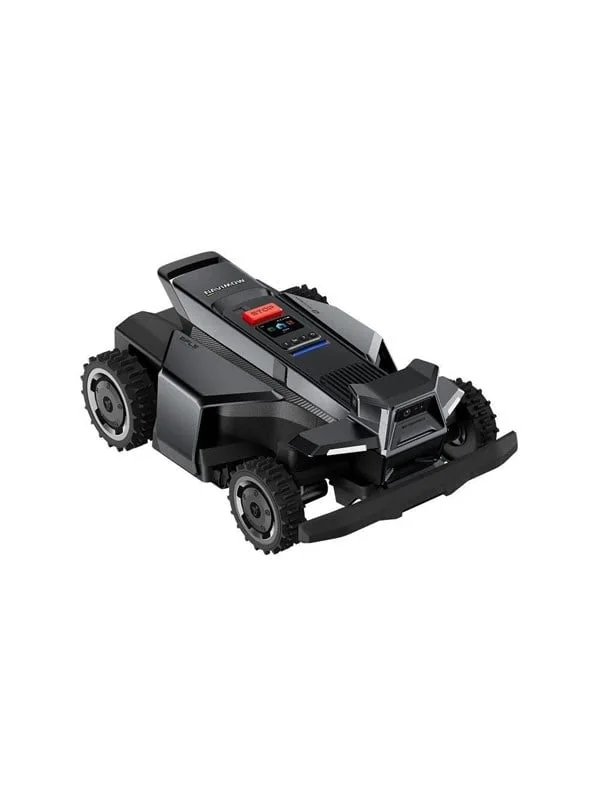
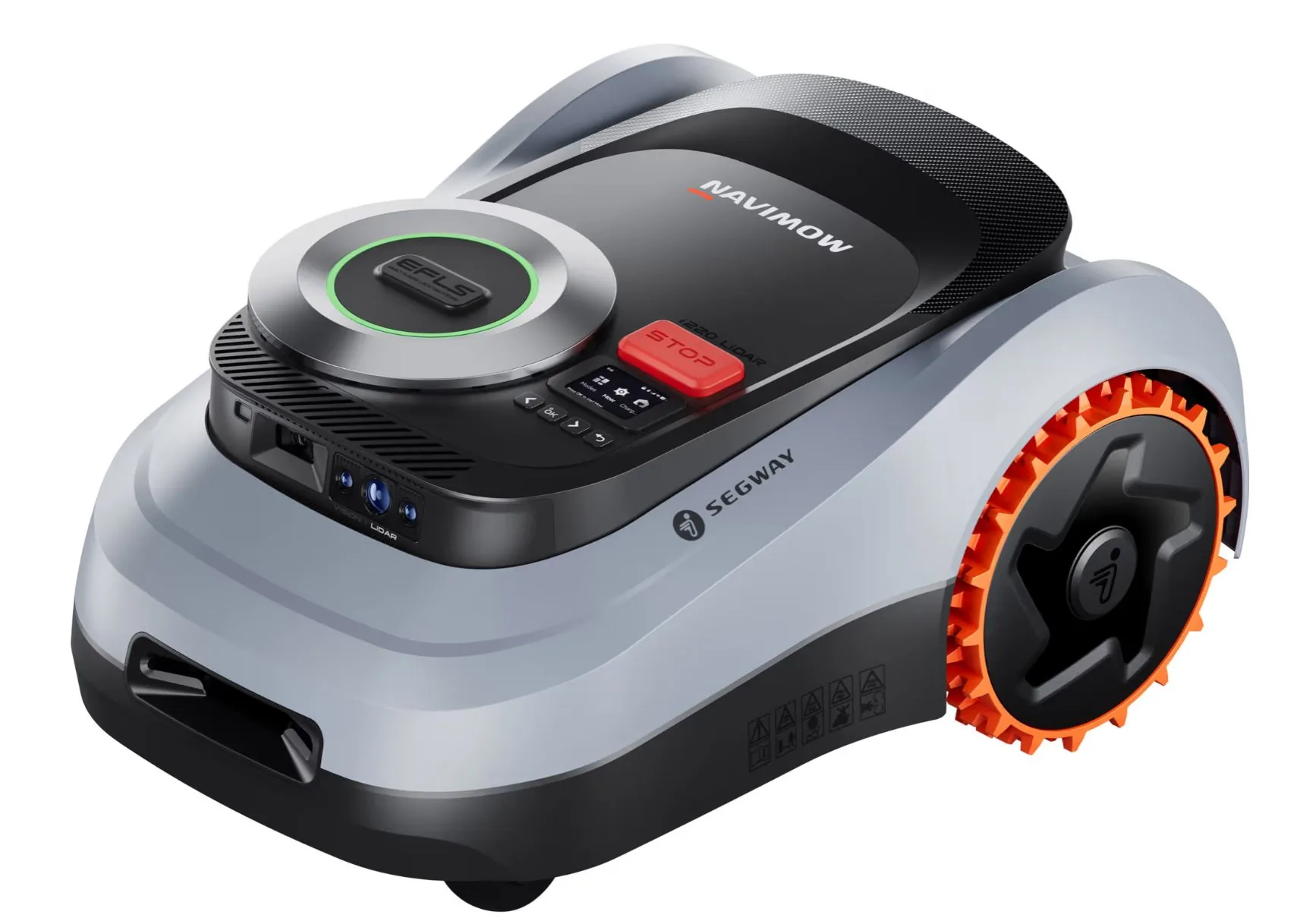
The Segway Navimow X420E, our pick for steep slopes. Segway's UK distributor rates it for 84%, about 40 degrees, using four-wheel drive with dual independent steering motors. No other mower in our comparison comes close. It covers up to 2,000 m² and positions itself with network RTK and a 360° camera.
The X420E is a big machine: 28.8 kg, a 43 cm cut from two floating discs and a cutting height of 20 to 95 mm. The weight helps traction but makes it awkward to carry up steps. Segway does not list an edge-mowing feature for it, so borders at the top and bottom of a bank still need trimming. For the RTK side of it, see the GPS robot lawn mower page.
Do you need all-wheel drive for a 45% slope?
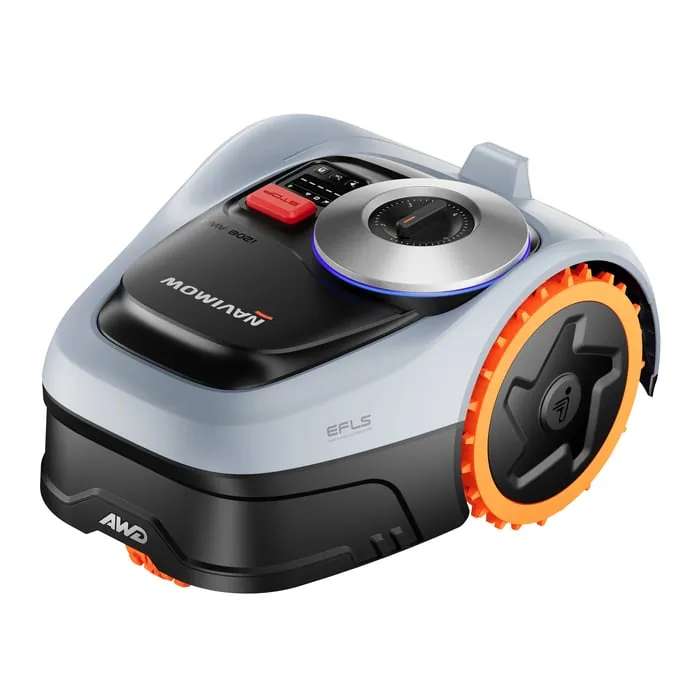
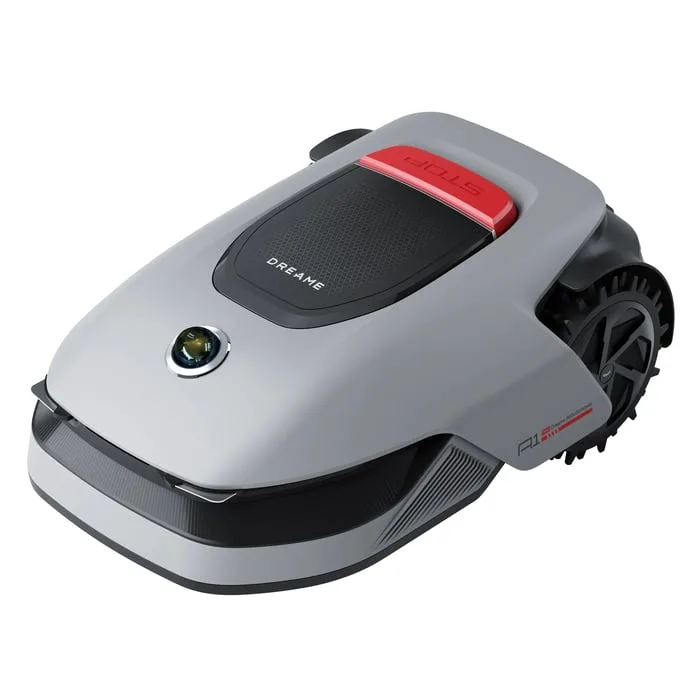
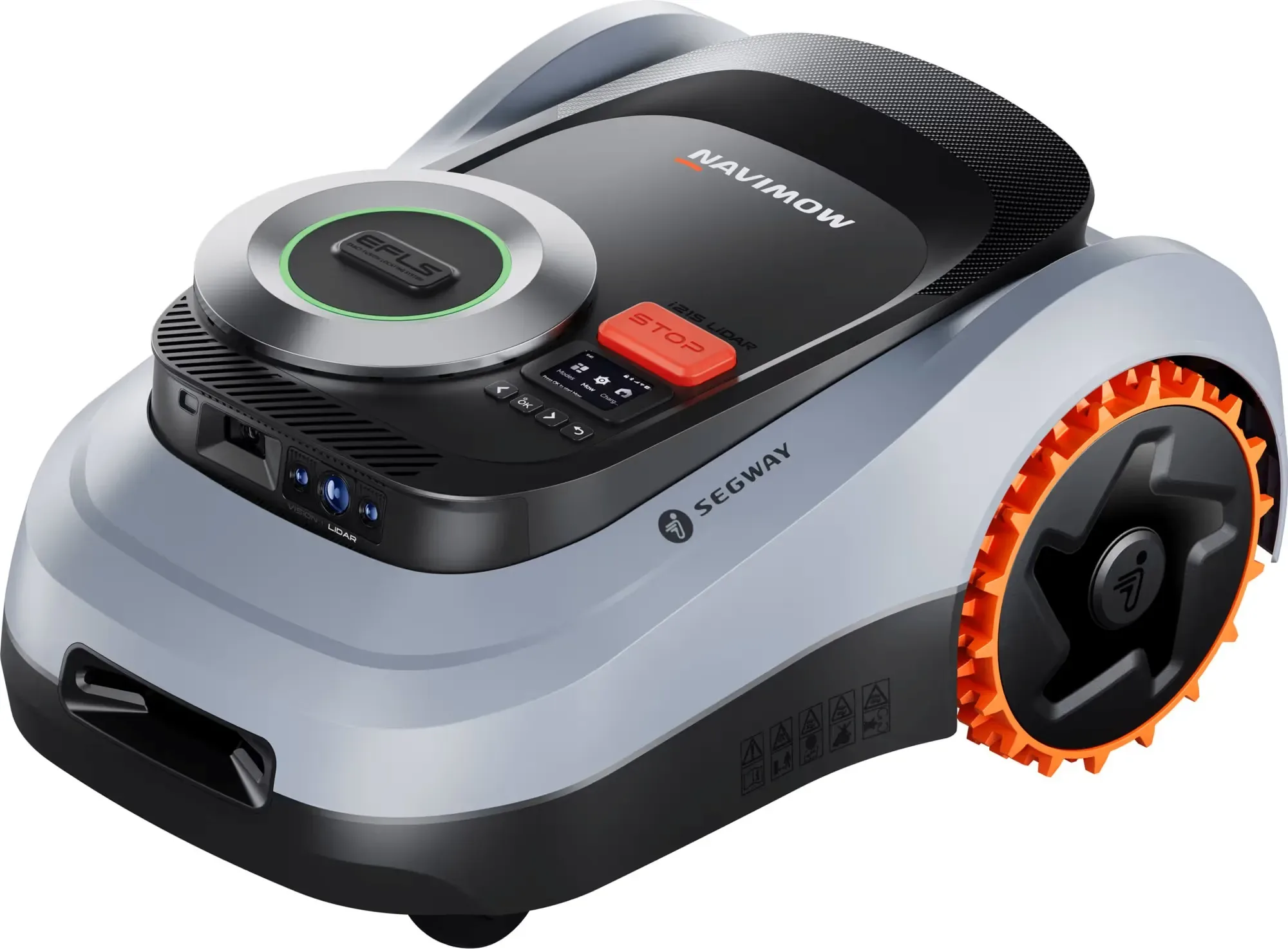
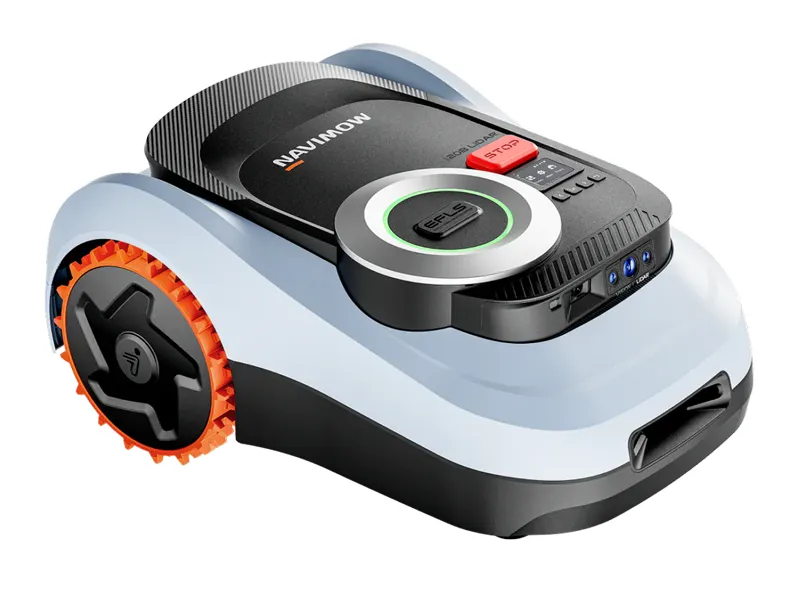
No, but it helps. The Segway Navimow i208 AWD drives all its wheels, uses off-road wheels and stability control, and is rated for 45% on up to 800 m². The Dreame A1 Pro and the Navimow i215 LiDAR reach the same 45% on two-wheel drive with off-road tyres. All-wheel drive gives more margin when the grass is wet.
The i208 AWD also turns on a third wheel without scuffing the turf, which Segway calls zero-turn steering; that matters on a slope, where a skidding turn tears grass. It uses network RTK with mobile data included, so check coverage at your postcode. The A1 Pro navigates by 3D LiDAR and covers 2,000 m², and Dreame states its slope limit as 45%, or 24 degrees. The i215 LiDAR adds a camera to LiDAR and covers 1,500 m².
Can a camera-only robot mower manage a sloping lawn?
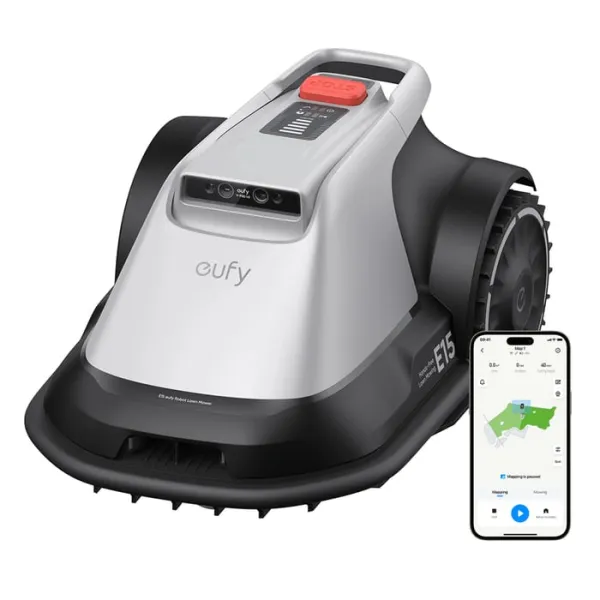
A moderate one, yes. eufy rates the E15 for 40%, about 22 degrees, on lawns of up to 800 m², with no wire and no antenna. It suits an evenly sloping lawn. It is less suited to a bumpy hillside, because eufy says it works best with surface variations under 3 cm.
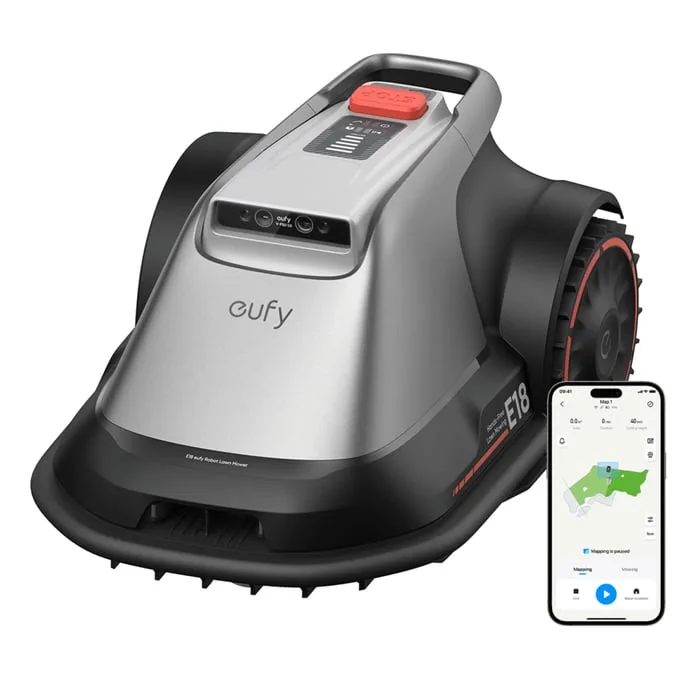
The larger E18 has the same 40% rating for up to 1,200 m². Both need a stable Wi-Fi or 4G connection, which can be weak at the bottom of a sloping garden far from the house. Check the signal there with your phone. eufy's Ride-on-Edge feature mows right up to the lawn edge.
Where should the charging station go on a sloping garden?
On level ground, at the edge of the lawn, with a straight and flat approach. A station on a slope makes docking unreliable, and a mower that misses the contacts ends the day with a flat battery. If the whole garden slopes, level a small area with paving slabs or compacted soil first.
Avoid the lowest point of the garden, where rainwater collects, and keep the approach away from the steepest part so the mower arrives straight. The station also needs an outdoor socket within reach of its cable. Our robot lawn mower installation guide covers placement in more detail.
What else should you plan for on a hillside lawn?
Drops, wet grass and signal. Set boundaries well back from retaining walls and steps, schedule mowing for drier hours, and check navigation at the bottom of the garden as well as the top. A valley garden can see less sky, which matters for RTK, and Wi-Fi may not reach.
For steep banks our pick is the Segway Navimow X420E, which Segway's UK distributor rates for slopes up to 84% with four-wheel drive. For a sloping lawn of up to 800 m², the Navimow i208 AWD climbs 45% with all-wheel drive. The Dreame A1 Pro reaches 45% on two wheels with off-road tyres.
Is a 45% slope the same as 45 degrees?
No. A 45% slope rises 45 cm for every metre across, which is about 24 degrees. A 45-degree slope is 100%: it rises one metre for every metre across. Robot mower makers almost always quote slope in per cent, so a mower rated for 45% is not built for a 45-degree bank.
Do I need all-wheel drive for a 35% slope?
Not necessarily. Several two-wheel drive models are rated for 45%, about 24 degrees, which leaves headroom over a 35% lawn. All-wheel drive earns its place on slopes near or beyond 45%, on banks that stay damp, and where the mower has to turn on the slope.
Can a robot mower mow a slope when the grass is wet?
It can, but grip drops on wet grass, and a mower close to its slope limit may slip or leave wheel marks. On a steep lawn, set the schedule for drier parts of the day and let the mower skip runs after heavy rain. Models with a rain sensor can pause automatically.
How close to a drop can a robot mower go?
Keep a margin. Set the boundary or a no-go zone well back from retaining walls, steps and steep edges, so a slip on damp grass cannot carry the mower over. On a wire-free model you can move the line in the app; on a wired one, the wire has to sit back from the drop.
How we compared
We compared every mower rated for at least 40% on the maker's slope figure, drive type (two-wheel, all-wheel or four-wheel drive), tyres, navigation and rated area. Slope ratings are the makers' own and assume dry grass in good condition.
A dash in the table means that neither the shop nor the manufacturer gives the figure. The awards are our editorial choice, and each card explains why. Our method is set out on the How we compare page.
Mowfriend chooses and ranks the products on its own. No manufacturer or shop can influence the order.