Best LiDAR robot mower (2026): Dreame and Navimow LiDAR models compared
A LiDAR robot mower scans the garden with a laser and finds its way by the walls, fences and trees around the lawn, the very things that block satellite signals. We compared the LiDAR models we cover by detection range, lawn area, slope and obstacle recognition.
We may earn a commission when you buy through our links.
Updated
Compared 4 products
Based on Shop and manufacturer information, not our own tests
Choose up to three products. Rows where they differ are highlighted.
What is a LiDAR robot mower?
A robot mower that measures distances with pulses of laser light and builds a 3D map of the garden from them. It recognises fixed features such as walls, fences, tree trunks and the shed, and works out where it is by its distance from each. It needs no boundary wire, no satellite signal and no RTK antenna.
LiDAR is the same technology used in self-driving cars and some robot vacuums. On a mower it does two jobs at once: navigation, because the map tells the mower where it is, and obstacle detection, because anything new in its path shows up in the scan. The Navimow models add a camera to recognise what an obstacle actually is.
When is LiDAR better than RTK or a camera?
When the lawn is surrounded by things that block the sky. Tall trees, a two-storey house, high hedges and narrow gardens between buildings all weaken satellite positioning, but give a LiDAR mower more to work with. LiDAR also does not rely on daylight, unlike a camera. Segway says its LiDAR models navigate reliably at night.
On a wide, open lawn with few features nearby, RTK has the edge, because the sky is clear and the LiDAR has less to measure against. Range matters here, which is why Dreame stresses the 70 m reach of the A1 Pro. A full comparison of the three methods is in our guide to RTK vs LiDAR vs vision, and RTK models are on the GPS robot lawn mower page.
Which LiDAR robot mower sees furthest?
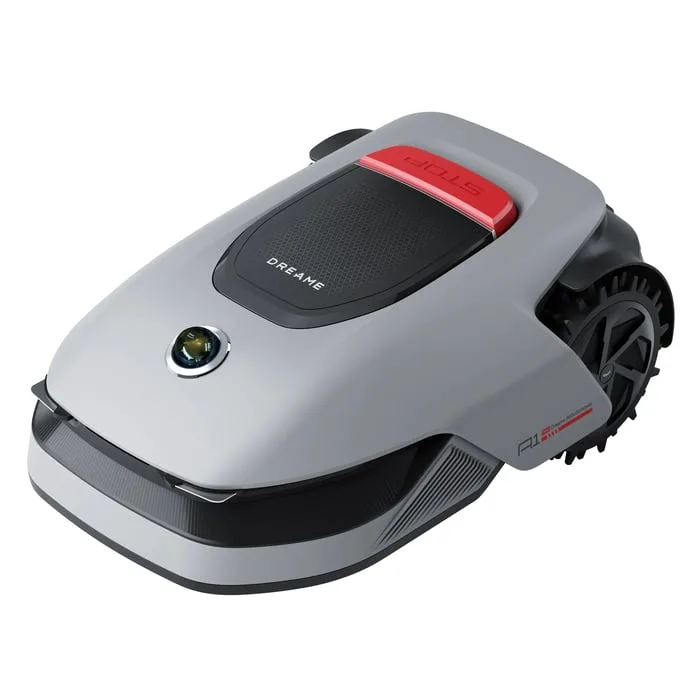
The Dreame A1 Pro, our pick for LiDAR. Dreame says its OmniSense 3D LiDAR has a 70 m detection range and maps the garden to 1 cm precision, with no RTK station. It is rated for 2,000 m² and slopes of 45%, about 24 degrees, and cuts 22 cm at 30 to 70 mm.
The long range lets it fix its position against features further away, which helps on a big plot. Dreame is candid about pace: the A1 Pro mows about 1,000 m² in 24 hours in standard mode, so covering the full 2,000 m² needs its efficient mode. It is two-wheel drive with off-road tyres, and Dreame gives 64 dB(A) for noise. Edge Mowing Mode and multi-area mapping are included.
Why do Navimow's LiDAR mowers add a camera?
To know what an obstacle is, not just that something is there. The Segway Navimow i2 LiDAR range pairs a 3D LiDAR with a camera, and Segway says the pair detects more than 200 types of obstacle with 1 cm precision. Recognising an object, rather than only sensing it, is what lets a mower decide how to handle it.
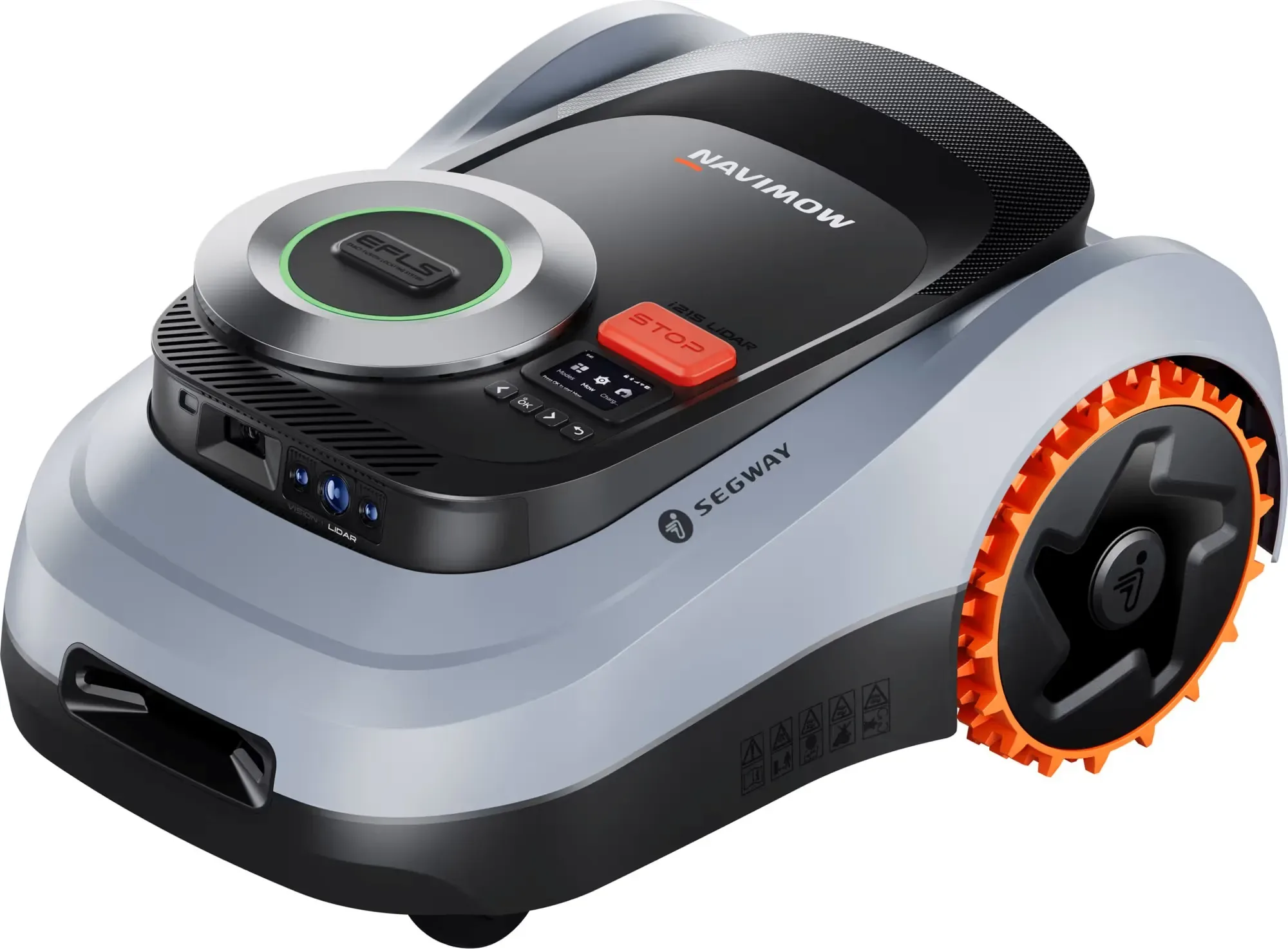
Segway also says the combination keeps navigation reliable under trees and at night. The Navimow i215 LiDAR is the middle model, rated for 1,500 m² and 45% slopes on off-road wheels with stability control. It cuts 21 cm at 30 to 60 mm and runs at 59 dB(A). If your lawn has many trees, it is a strong fit; it is also compared on our robot lawn mower for large gardens page.
Which LiDAR mower size suits your lawn?
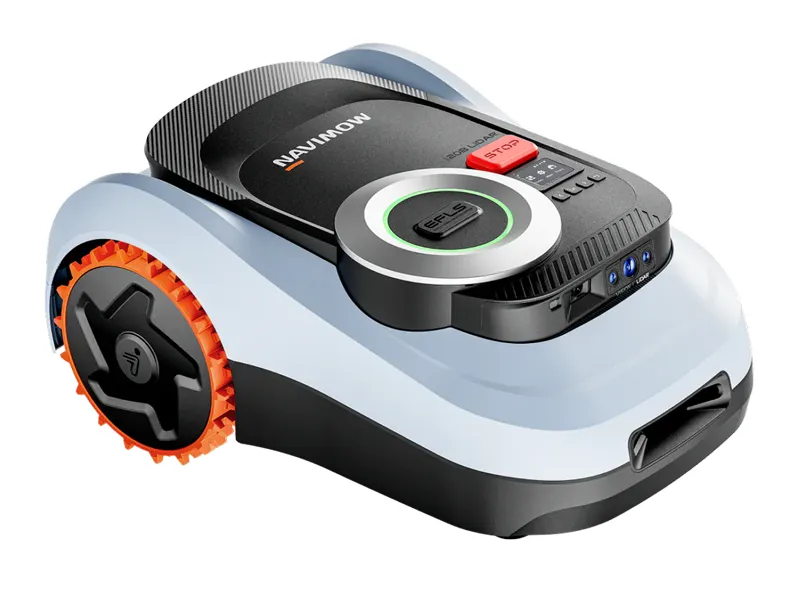
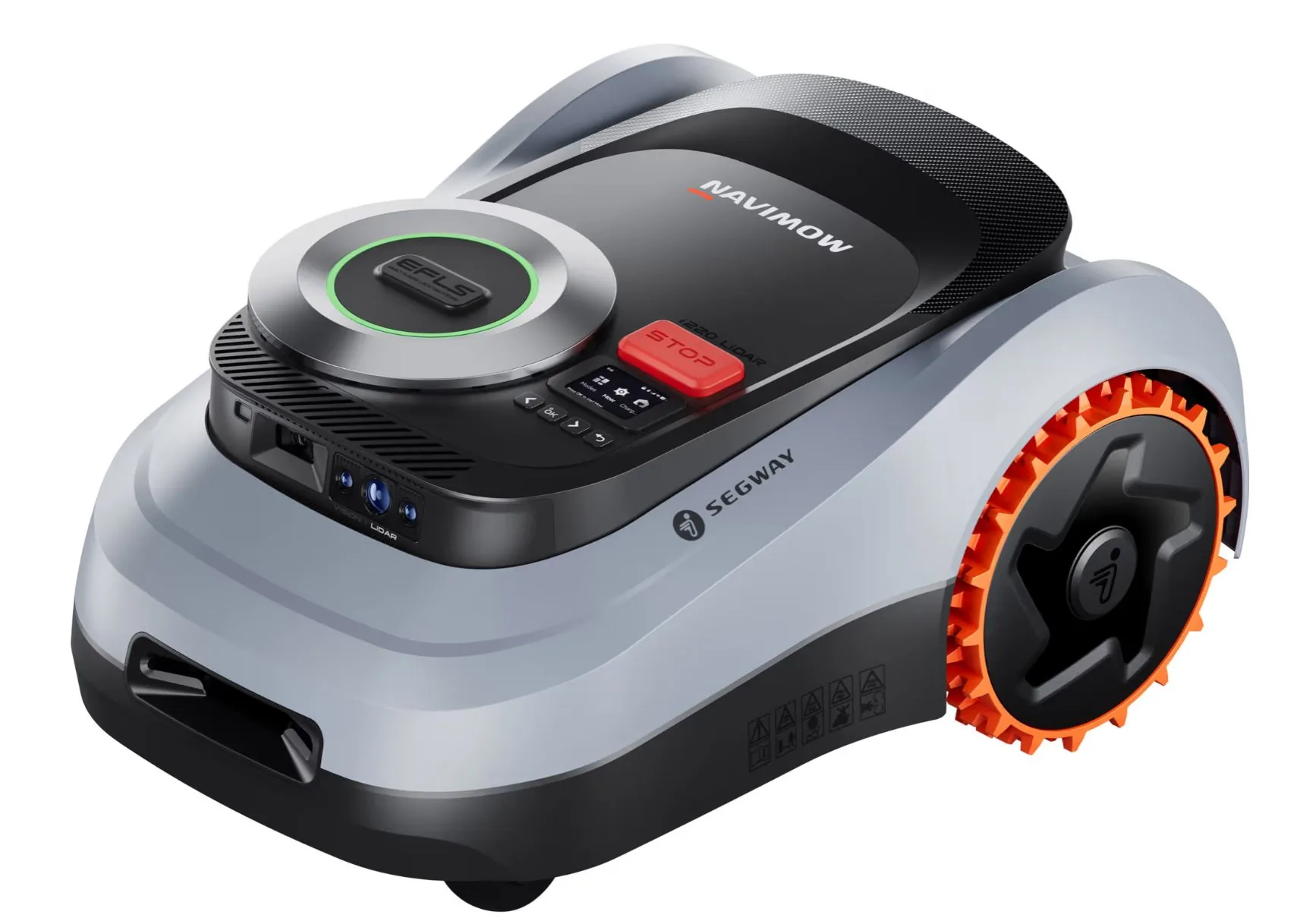
Match the rating to your grass area with some headroom. The Navimow i2 LiDAR range comes in three sizes with the same hardware: the i208 LiDAR for up to 800 m², the i215 for 1,500 m² and the i220 for 2,000 m². All climb 45% and cut 21 cm, so the choice is about area alone.
For a typical British back garden shaded by houses and trees, the i208 LiDAR is the natural fit, and it also appears on our robot lawn mower for small gardens page. The i220 suits large lawns with a lot of tree cover. If you are not sure of your area, the lawn size calculator works it out from length and width.
What are the limits of a LiDAR robot mower?
It needs fixed features within range to place itself, and it cannot climb beyond its slope rating. A big, flat field with no walls or trees near the middle gives a short-range LiDAR little to work with. None of the LiDAR models here has all-wheel drive, so banks steeper than 45% are out of reach.
For steeper ground, the four-wheel drive Navimow X420E is rated for 84%, but it navigates with network RTK and a camera instead of LiDAR; see our page on the robot lawn mower for slopes. A dirty sensor cover can blur the scan, so keep it clean along with the rest of the mower.
Are LiDAR robot mowers safe around hedgehogs?
They see more than most, but no robot mower guarantees it will spot a small animal. Hedgehogs forage at night and curl up rather than run, so the safest step is to mow only in daylight, even with a mower that can navigate in the dark. Set the schedule in the app and leave the evenings free.
Our pick is the Dreame A1 Pro: a 3D LiDAR with a 70 m detection range, no RTK station, and a rating of 2,000 m² and 45% slopes. If you prefer Segway's app or want a camera alongside the LiDAR, the Navimow i215 LiDAR covers 1,500 m² and the i220 LiDAR 2,000 m².
Does a LiDAR robot mower need GPS or an antenna?
No. A LiDAR mower works out its position from the shapes around it, so it needs no satellite signal, no RTK antenna and no network subscription for navigation. You still need the charging station and the app, and a Wi-Fi or mobile connection for remote control and updates.
Can a LiDAR mower cut several lawns?
Yes. You map each lawn as a zone and the mower travels between them on a route you set. Dreame lists multi-area mapping with 2D and 3D maps for the A1 Pro. The route between lawns needs to be firm, level and wider than the mower.
Do LiDAR robot mowers cut right to the edge?
They get close. Dreame has an Edge Mowing Mode on the A1 Pro, and Segway lists an edge-cutting function for its Navimow LiDAR models. As with every robot mower, a narrow strip along walls and fences may still need trimming by hand now and then.
Will moving garden furniture confuse a LiDAR mower?
Not usually. A LiDAR mower places itself against fixed features such as the house, walls, fences and tree trunks, and treats smaller items like chairs as obstacles to drive round. If you make a big change, such as a new shed or the removal of a hedge, remap that part of the garden.
How we compared
We compared the LiDAR mowers we cover on sensor type and detection range, whether a camera backs up the laser, rated lawn area, slope, cutting height and width, and noise. Figures come from the makers' UK pages.
A dash in the table means that neither the shop nor the manufacturer gives the figure. The awards are our editorial choice, and each card explains why. Our method is set out on the How we compare page.
Mowfriend chooses and ranks the products on its own. No manufacturer or shop can influence the order.