Best robot lawn mower without perimeter wire (2026): wire-free models compared
No wire to peg round the lawn, and no broken loop after scarifying. We compared robot lawn mowers without a perimeter wire by how they find their way, how much lawn they cover, how steep a slope they climb and how close they cut to the edge.
We may earn a commission when you buy through our links.
Updated
Compared 11 products
Based on Shop and manufacturer information, not our own tests
Choose up to three products. Rows where they differ are highlighted.
How does a robot lawn mower without a perimeter wire know where the lawn ends?
It works out its own position and compares it with a map you make once in the app. You steer the mower round the lawn edge once and it remembers the line. Position comes from satellites corrected by RTK, from a 3D LiDAR scan, from a camera, or from two of these together.
With a wired mower the boundary is a physical loop of cable pegged into the turf, and the mower turns when it senses the signal from that loop. A wire-free mower has nothing in the ground. The edge is a line on a digital map, and you can move it, add a flower bed as a no-go zone or draw a path to a second lawn without picking up a spade. The three methods are explained side by side in our guide to RTK vs LiDAR vs vision.
Which wire-free robot mower suits an open lawn?
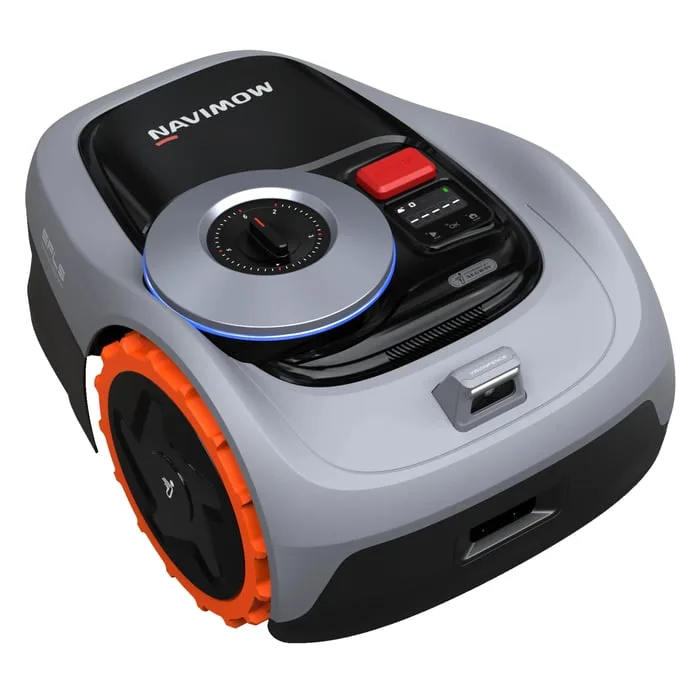
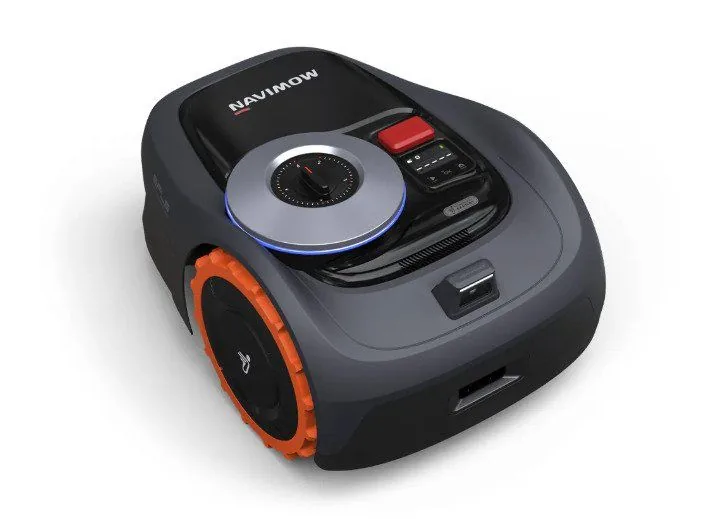
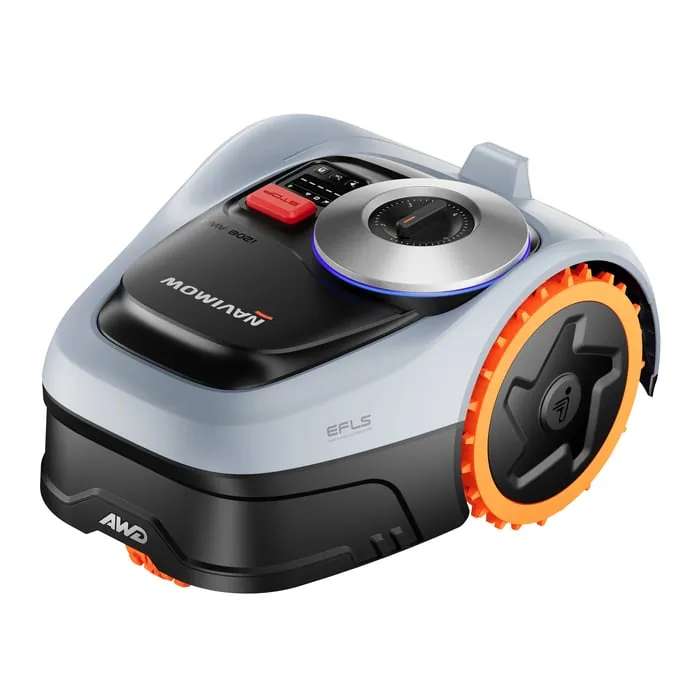
On a lawn with plenty of open sky, an RTK mower is the natural choice, and the Segway Navimow i105E is our pick. Segway says it combines RTK with camera mapping (EFLS 2.0), recognises more than 150 types of obstacle with its VisionFence camera and covers up to 500 m² on slopes of up to 30%.
RTK gives centimetre-level positioning, so the mower can run straight, overlapping lines rather than wandering at random. The i105E cuts an 18 cm strip at 20 to 60 mm and Segway gives 58 dB(A) for noise. If your lawn is a little bigger, the i108E uses the same idea for up to 800 m². More RTK models are on our page about the GPS robot lawn mower.
What if trees or the house block the sky?
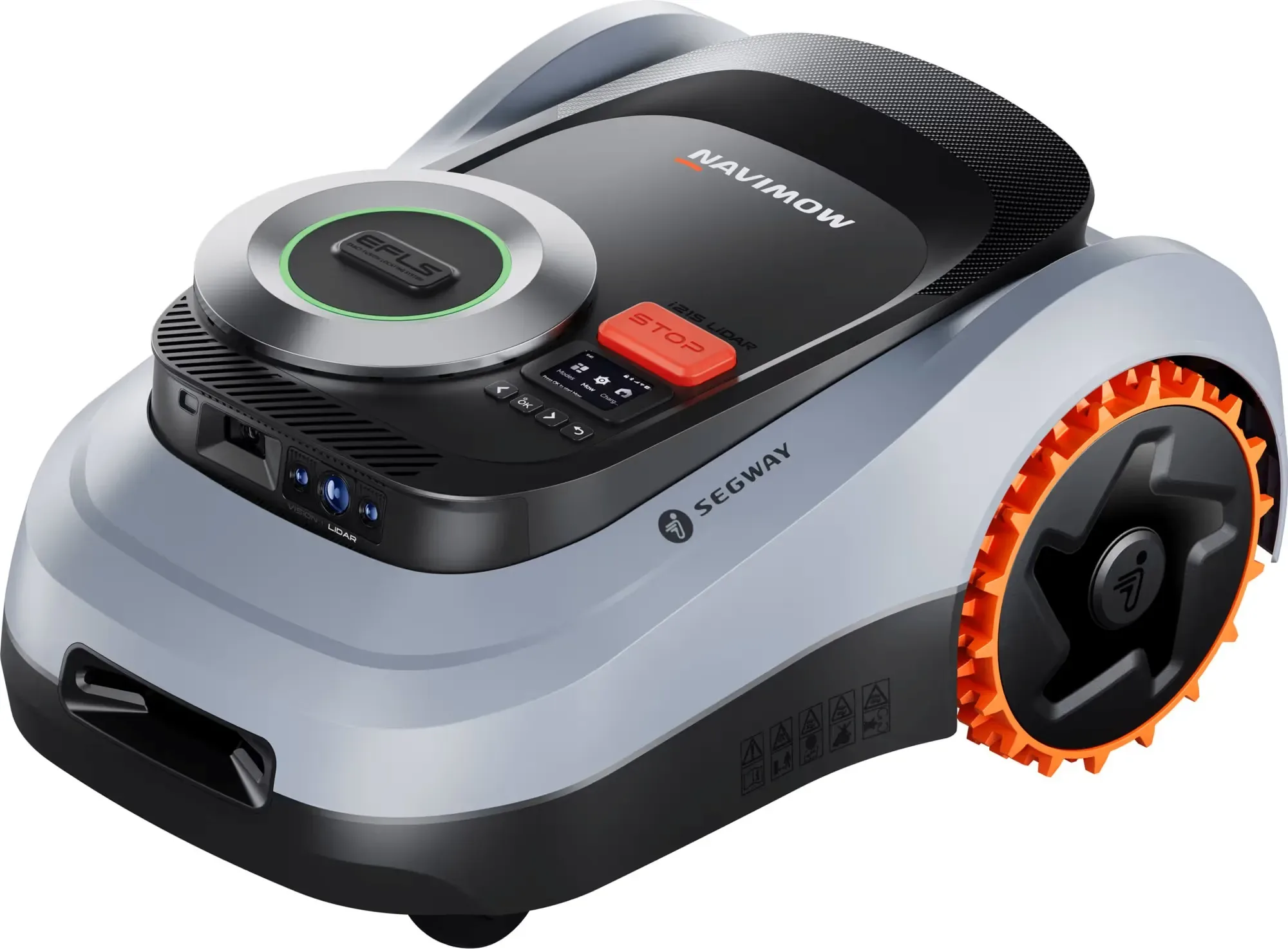
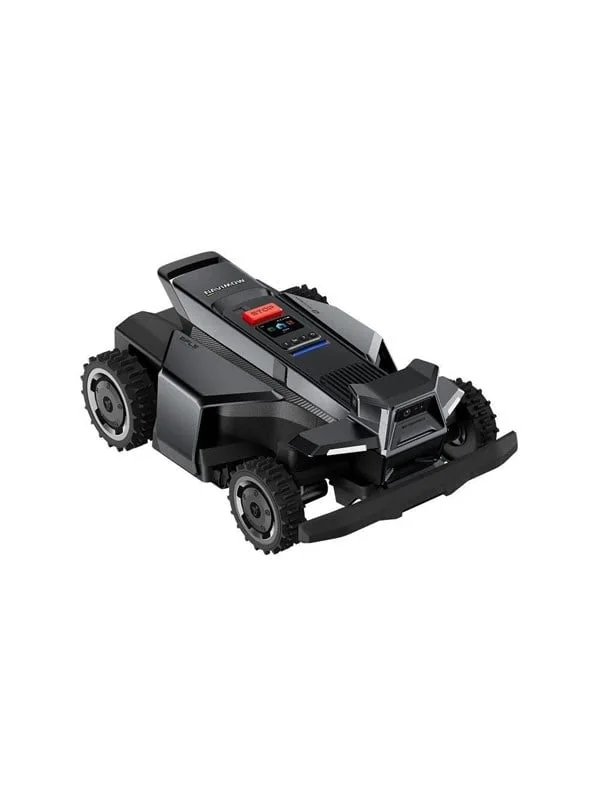
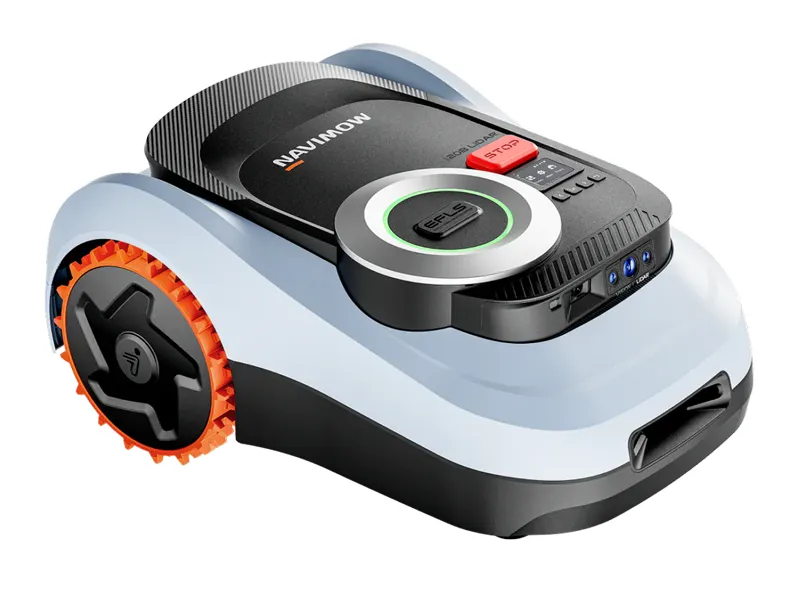
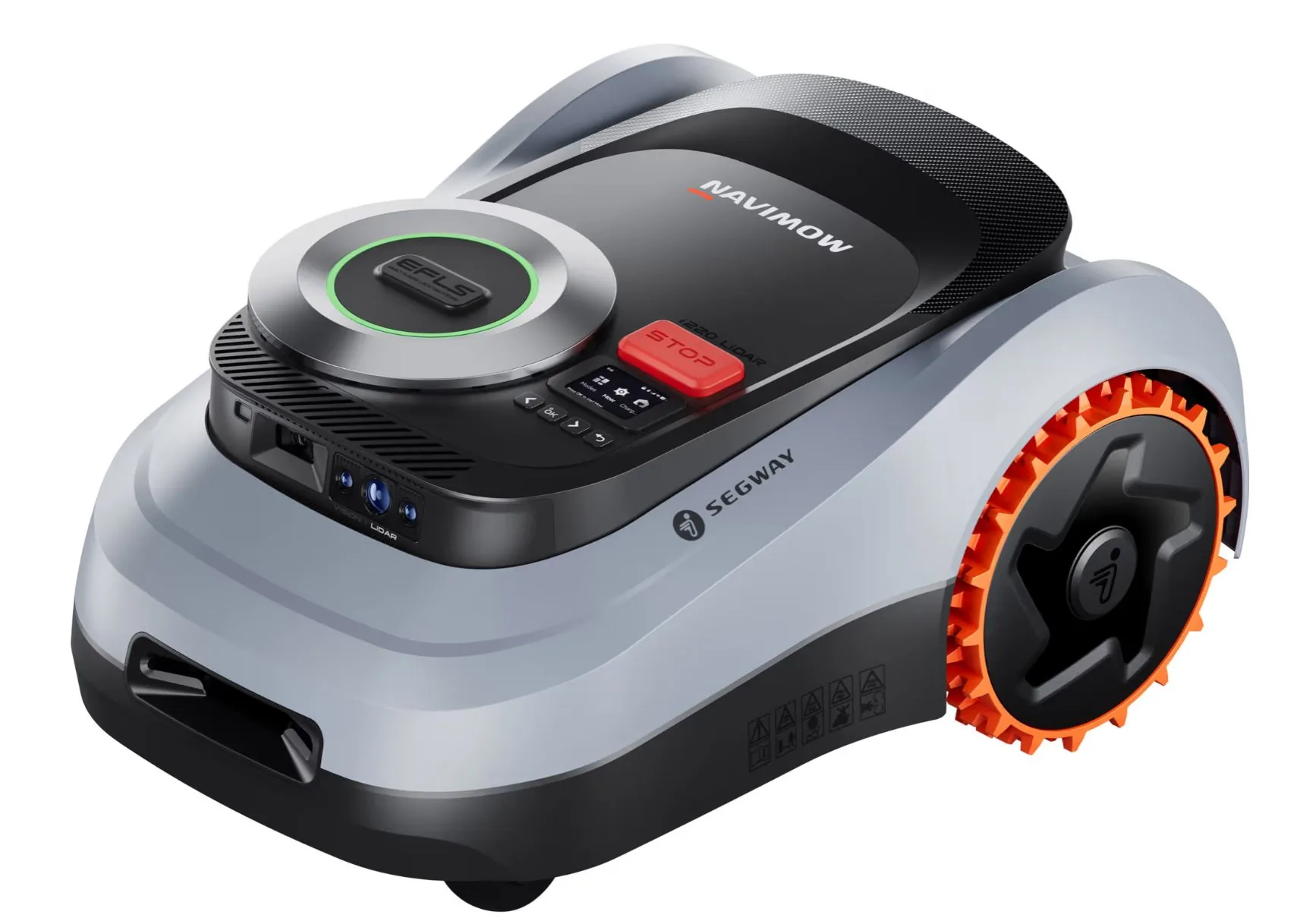
Then LiDAR is the better bet, because it does not need a satellite signal at all. The Segway Navimow i215 LiDAR scans the garden with a 3D laser and checks what it sees with a camera, so walls, fences and tree trunks become its reference points. Segway rates it for up to 1,500 m² and 45% slopes.
Satellite positioning can drift close to a tall house wall or under a dense canopy, which is common in British gardens with mature trees along the boundary. A LiDAR mower has the opposite habit: the more fixed shapes it can see, the better it knows where it is. Segway says the i215 detects more than 200 obstacle types with 1 cm precision. The full LiDAR range is on our LiDAR robot mower page.
Can a robot mower with no wire work without any antenna or base station?
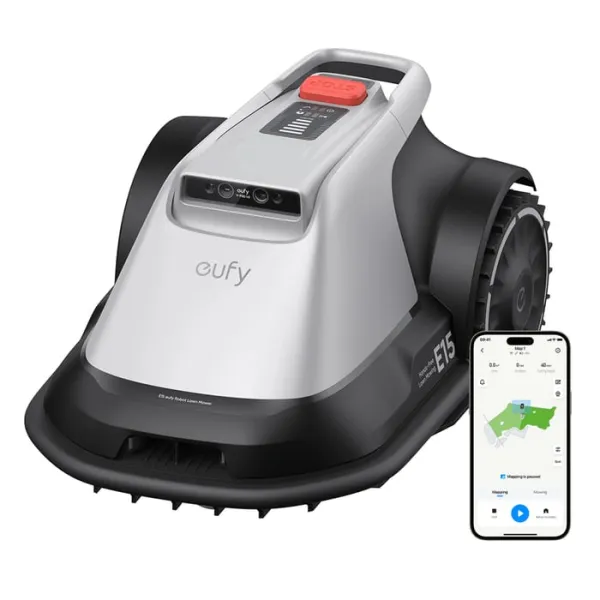
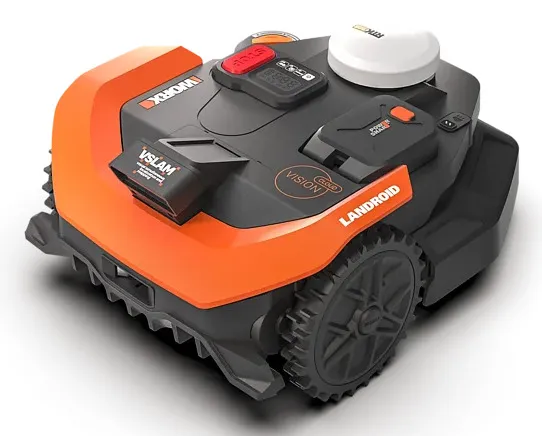
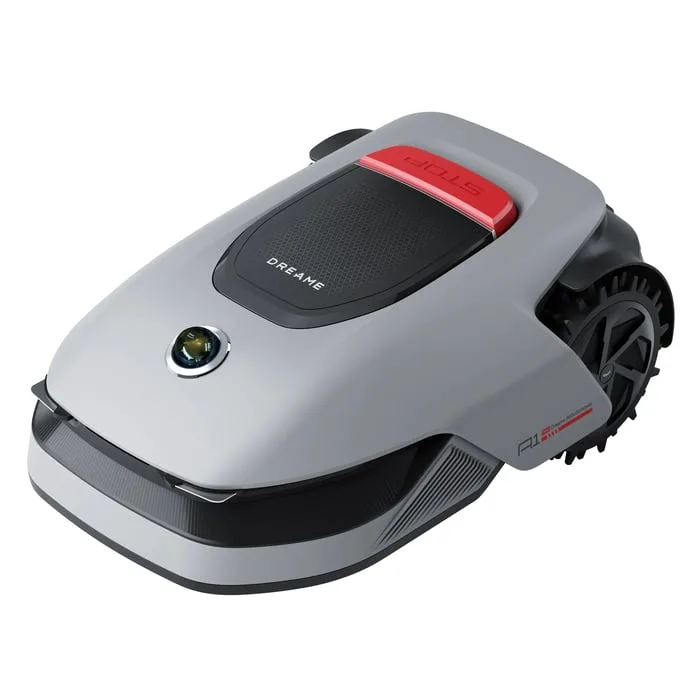
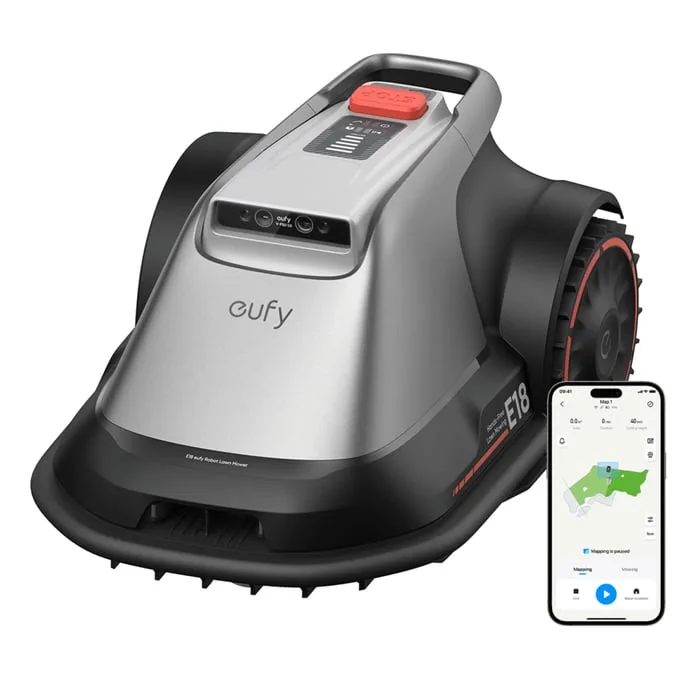
Yes. A camera-only mower such as the eufy E15 needs nothing in the garden apart from its charging station. LiDAR mowers like the Dreame A1 Pro also manage without an RTK station. The Worx Landroid Vision Cloud L1800 still uses RTK, but its correction data arrives over the internet rather than from a mast you put up.
Each route has a catch. eufy says the E15 needs a stable Wi-Fi or 4G signal in the garden and works best on a mostly flat lawn, with bumps under 3 cm. Worx says the L1800 relies on Wi-Fi or 4G for its cloud RTK corrections and climbs up to 30%. The A1 Pro maps with a 3D LiDAR that Dreame says reaches 70 m, but in standard mode it mows about 1,000 m² in 24 hours, so a full 2,000 m² lawn needs its efficient mode.
Is a wire-free mower harder to set up than a wired one?
Usually it is quicker. Instead of pegging a cable round every edge and bed, you place the charging station, connect the app and walk the mower round the boundary once. On an RTK model you also mount the antenna or check network coverage.
The work that remains is the same for any robot mower: a level spot for the charging station near an outdoor socket, a clear route from the station to the lawn, and a lawn cut short before the first run. Steps, gravel paths and gaps narrower than the mower need thought in either case. Our robot lawn mower installation guide goes through it in order.
Are wire-free robot mowers safe for hedgehogs and pets?
The wire-free models we compare all see with a camera, LiDAR or both, which helps, but no maker promises to spot every small animal. The safest rule for British gardens is to mow in daylight only, because hedgehogs forage from dusk. Set the schedule in the app and leave the night free.
Obstacle detection is where wire-free mowers differ most. Segway lists more than 150 obstacle types for the i105E, including pets, and more than 200 for its LiDAR models. eufy describes a 3D perception system on the E15 and E18. Toys, hoses and fallen fruit still need picking up before a run. Advice from hedgehog charities is collected in our guide to robot mowers and hedgehogs.
Should you swap a wired robot mower for a wire-free one?
It pays off if the wire keeps breaking, if you change the garden often, or if you want to split the lawn into zones without digging. The old cable can stay in the ground. If your wired mower works and the layout never changes, there is less reason to switch, and a wired machine is still a sound choice.
Steep gardens are the exception where wire-free models now lead. The Segway Navimow X420E, with four-wheel drive and network RTK, is rated for slopes up to 84%, far beyond any wired mower in our comparison; see our page on the robot lawn mower for slopes. If you would rather stick with a wire, the Worx Landroid M500 Plus is the model we compare, and the perimeter wire guide explains how the loop works. For every model side by side, see the best robot lawn mower comparison.
Common questions
Which is the best robot lawn mower without perimeter wire?
Our pick for most gardens is the Segway Navimow i105E: RTK and a camera, no wire, and room for a lawn of up to 500 m². If tall trees shade the lawn, the Navimow i215 LiDAR is the safer choice. If you want nothing in the garden but the charging station, look at the eufy E15.
Do wire-free robot mowers need a subscription?
Not for navigation on the models we compare. Worx says the cloud RTK service on the Landroid Vision Cloud L1800 needs no extra subscription, and Segway includes network RTK and its mobile data with the i208 AWD. The eufy E15 and E18 need Wi-Fi or 4G, and a 4G data plan if your Wi-Fi does not reach.
Can a robot mower with no wire cut a front and a back lawn?
Yes. Wire-free models let you map more than one zone in the app and set the route between them, so the mower drives from one lawn to the other on its own. Dreame lists multi-area mapping for the A1 Pro. A wired mower can only do this if the wire links both lawns.
What happens if a wire-free mower loses its signal?
That depends on the navigation. Segway says the i105E mixes RTK with camera mapping, so it keeps its place where the satellite signal is weak. LiDAR models work from the shapes around them and need no signal. A camera-only mower relies on what it can see, so very uneven ground is harder for it.
Do wire-free robot mowers work at night?
Some can. Segway says the LiDAR and camera on its i2 LiDAR models keep navigation reliable at night. Whether you should mow at night is another matter: hedgehogs are out after dark, so a daytime schedule is the kinder choice for a British garden.
How we compared
We read the makers' UK product pages and specification sheets and compared how each wire-free mower navigates, its rated lawn area, slope limit, cutting height, cutting width and noise. A dash means the maker does not publish the figure.
A dash in the table means that neither the shop nor the manufacturer gives the figure. The awards are our editorial choice, and each card explains why. Our method is set out on the How we compare page.
Mowfriend chooses and ranks the products on its own. No manufacturer or shop can influence the order.